
Plantation shutters fit most windows, provided there is sufficient mounting depth, hardware clearance, panel opening space and structural support. Checking a few requirements before ordering will help you ensure the shutters look good and operate properly.
Plantation shutters can have a profound impact on your home’s interior, enhancing its visual appeal while improving privacy, natural light control and everyday comfort. In fact, choosing the right shutters can transform not only the look and feel of your living spaces but also how you experience and enjoy your home throughout the year.
However, many homeowners choose plantation shutters based on their appearance, colour and price, without considering how they will work with their existing windows. Unfortunately, overlooking a protruding handle or limited opening space can turn a beautiful window furnishing into an everyday inconvenience.
So, if you are searching for plantation shutters in Epping, getting the measurements right is only the beginning. Understanding how your shutters will function is equally important. This guide explains seven essential checks to help you make an informed purchase and avoid unnecessary installation problems.
Can Plantation Shutters Be Fitted to Any Window?
Custom-made plantation shutters can accommodate many window shapes, sizes and configurations. However, not every window is suitable for the same shutter design or mounting method.
For example, a recessed bedroom window may have sufficient space for an internal shutter frame, while a shallow aluminium window could require an alternative mounting arrangement.
Similarly, sliding doors, bay windows and unusually wide openings may need specialised configurations. Therefore, rather than assuming one shutter style will suit your entire home, assess each opening individually.
1. Check Your Window Reveal Depth
Window reveal depth determines whether plantation shutters can sit inside the window opening without obstructing the glass, hardware or louvres.
The reveal is the recessed space surrounding your window. Although it might appear deep enough, handles, locks and other fittings can reduce the actual space available.
When assessing the reveal, consider:
- The distance between the front of the window opening and the nearest obstruction.
- The depth available at the top, middle and bottom.
- The space required for the shutter frame and rotating louvres.
- Whether existing flyscreens need to remain accessible.
This is particularly important when comparing the aluminium windows found in many newer Epping homes with older timber-framed windows.
Inside-Mounted vs Face-Mounted Plantation Shutters
There are two common mounting approaches:
| Mounting style | How it works | When it may suit |
| Inside-mounted | The shutter frame sits within the window reveal. | Windows with suitable depth and clearance. |
| Face-mounted | The frame is positioned over the opening or surrounding trim. | Shallow reveals or windows with obstructing hardware. |
There is no universal minimum depth that suits every shutter. Requirements vary depending on the selected frame, louvre size and product specifications.
What to do if the check fails: Ask whether an alternative frame or face-mounted configuration can provide sufficient working clearance.
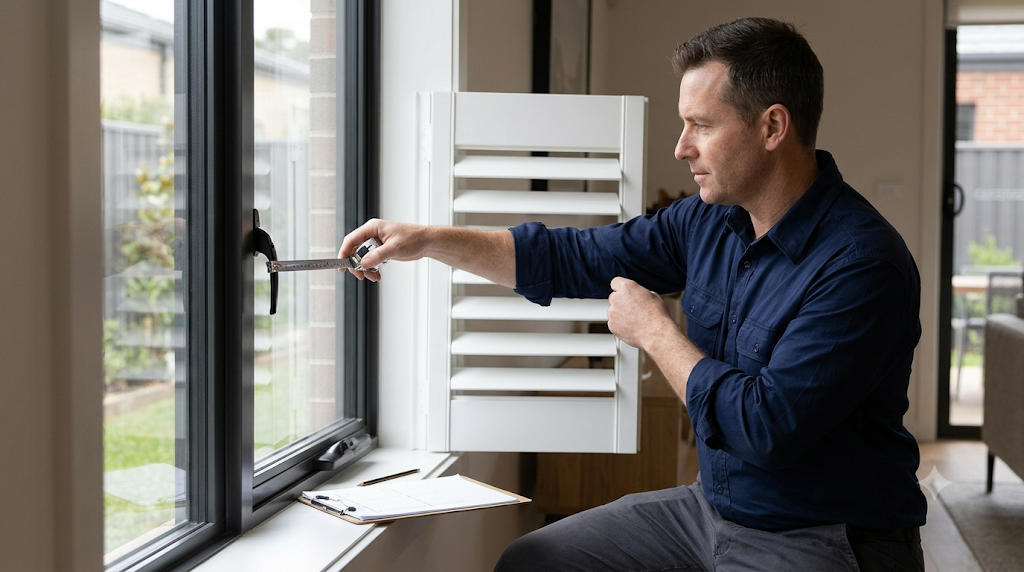
2. Check Window Handles, Locks and Winders
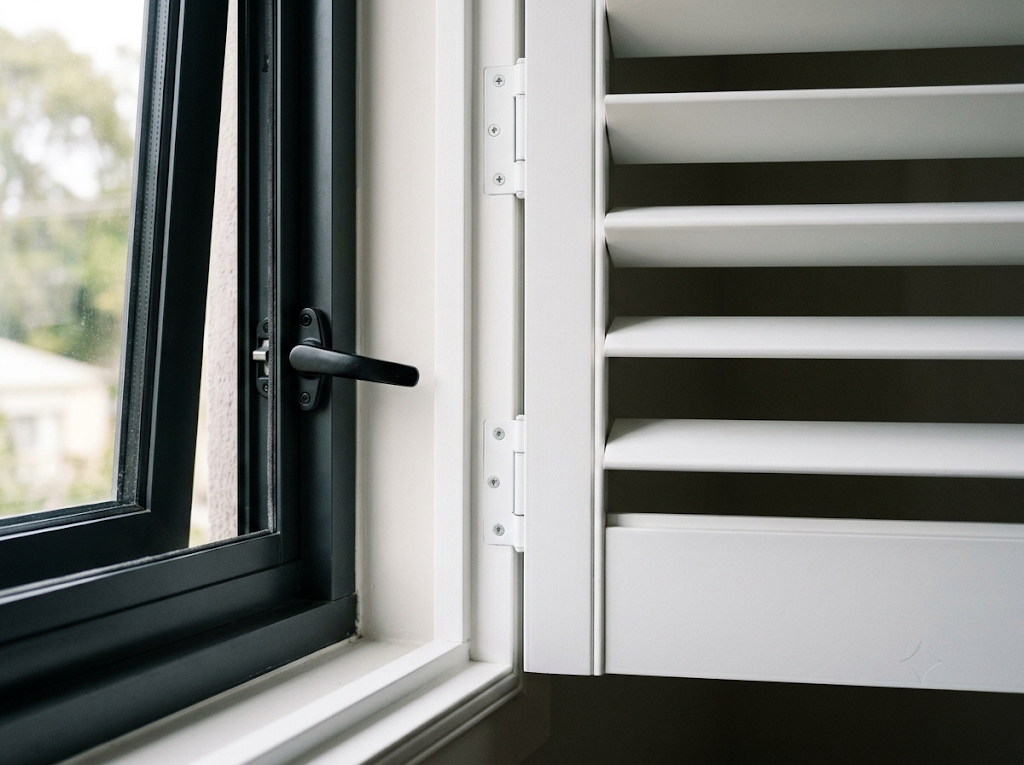
Plantation shutters should not prevent you from operating your existing windows. Handles, locking mechanisms and winders must have sufficient clearance when both the shutters and windows are in use.
A handle might appear small when the window is closed. However, once it rotates or extends during operation, it can occupy the same space required by the shutter louvres.
Before ordering, check whether:
- Window handles protrude into the proposed shutter area.
- Winders can rotate without hitting the frame.
- Locks and keys remain accessible.
- Window sashes can open without obstruction.
During Melbourne’s warmer months, being able to open windows easily is particularly useful for natural ventilation. Consequently, preserving access to window hardware should be treated as a functional requirement rather than an optional extra.
What to do if the check fails: Discuss a different mounting position or frame configuration with your consultant. Avoid modifying window locks or safety fittings simply to accommodate shutters.
3. Allow Enough Space for Shutter Panels to Open
A properly fitted plantation shutter needs room for its panels to move without hitting nearby furniture, walls or fixtures.
While adjustable louvres provide everyday light control, opening the complete shutter panel may be necessary for cleaning, ventilation and window maintenance.
Look around each window for possible obstructions, including:
- Bedheads and bedside tables.
- Sofas and shelving units.
- Kitchen taps and benchtops.
- Nearby walls, doorways and wardrobes.
For instance, shutters installed above a kitchen sink may have sufficient window clearance but limited room to swing past the tap.
Consider how your furniture is currently arranged and whether you expect to change the room layout later.
What to do if the check fails: Explore narrower panels, a different opening direction or an alternative window furnishing that requires less operating space.
4. Check Sliding Doors and Large Window Openings
Sliding doors and wide windows require special consideration because plantation shutters must accommodate both the opening dimensions and household movement.
Although hinged shutters can suit many standard windows, frequently used patio doors may require sliding or bi-fold configurations where suitable products are available.
For larger openings, check:
- Individual panel dimensions and weight limitations.
- Available track or folding space.
- Clearance around door handles.
- Access to outdoor areas.
- Whether the shutters restrict the usable doorway opening.
This is especially relevant in Epping homes with open-plan living areas and large glass doors leading to courtyards or alfresco spaces.
When Blinds May Be a More Practical Option
If your family regularly uses a sliding door, a suitable blind or curtain may provide easier access than a hinged shutter panel.
Instead of prioritising a matching appearance throughout your home, consider how frequently each window and doorway is used.
What to do if the check fails: Request a comparison of suitable shutter configurations and alternative furnishings before committing to a particular design.
5. Consider Privacy, Ventilation and Natural Light
Plantation shutters should meet the practical requirements of each room. A suitable installation allows you to adjust privacy and daylight without unnecessarily restricting airflow or window access.
For street-facing windows, adjustable louvres can offer privacy while allowing daylight into the room. However, the same arrangement may not provide sufficient darkness for a bedroom where a child needs to sleep during the day.
Consider the following room-specific requirements:
- Living rooms: Adjustable daylight and daytime privacy.
- Bedrooms: Darkness, privacy and comfortable ventilation.
- Bathrooms: Moisture-resistant materials and appropriate airflow.
- Kitchens: Easy cleaning and unobstructed window access.
Furthermore, plantation shutters generally allow some light to enter around their frames and louvres, even when closed.
What to do if the check fails: Compare plantation shutters with custom blockout blinds or curtains, particularly in rooms where greater darkness is essential.
6. Check Material Quality and Window Frame Alignment
The appearance and operation of plantation shutters depend on both the product specifications and the condition of the existing window frame.
Older homes may have window openings that are slightly out of square. Meanwhile, larger openings can place additional demands on panel construction, hinges and supporting frames.
Before approving your order, confirm:
- The proposed material is suitable for the room’s conditions.
- Panel dimensions fall within the manufacturer’s specifications.
- The window frame provides suitable fixing points.
- The installer has accounted for uneven or irregular openings.
When comparing products from blind manufacturers in Melbourne, ask about material limitations and construction specifications rather than relying solely on appearance or warranty length.
Also consider Melbourne’s seasonal temperature changes and the moisture regularly present in bathrooms and laundries.
What to do if the check fails: Request a revised frame configuration, suitable mounting preparation or an alternative material before manufacturing begins.
7. Confirm the Final Measurements Before Approving Your Quote
A professional measurement and quote should establish whether the proposed plantation shutters can fit securely and operate as intended.
As custom-made window furnishings are manufactured for individual openings, resolving measurement problems before production is considerably easier than addressing them afterwards.
Before approving a quotation, make sure it identifies:
- Each window included in the order.
- The selected material, colour and frame style.
- The mounting position and panel configuration.
- Clearance requirements around handles and furniture.
- Installation inclusions and the total payable price.
- Relevant product and workmanship warranty conditions.
Ask the consultant to explain how the shutters will operate and whether you will need to make any changes to existing furnishings or furniture.
It is also worth understanding your consumer rights before purchasing. The Australian Competition and Consumer Commission’s warranty guidance explains how voluntary warranties operate alongside Australian Consumer Law guarantees.
What to do if the check fails: Request clarification or updated written specifications before approving the final order.
Plantation Shutters and Blinds in Melbourne: Which Option Suits Your Room?
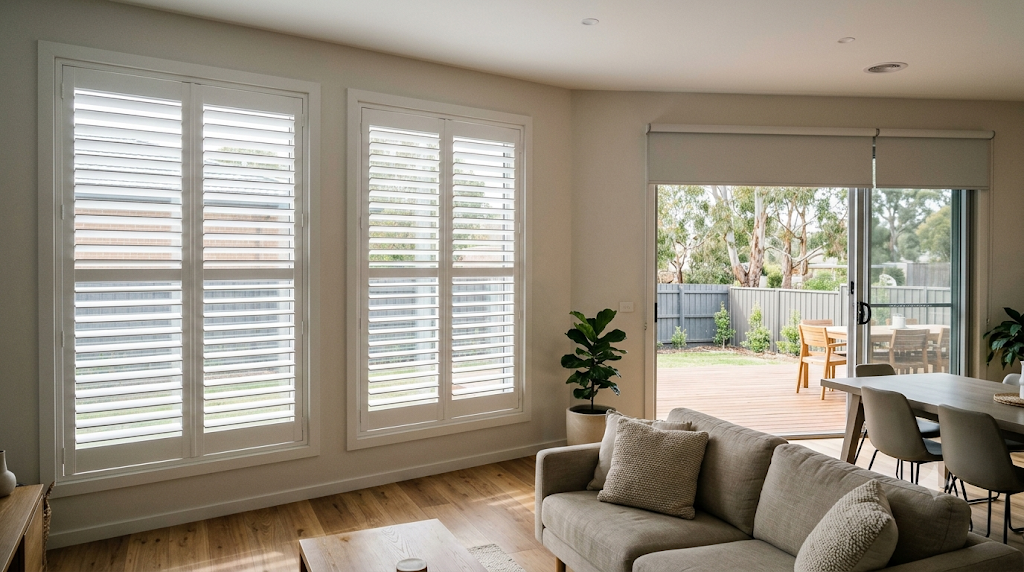
Choosing between plantation shutters and blinds in Melbourne should involve more than comparing colours and prices.
Whether you are browsing blinds in Thomastown or comparing plantation shutters in Hoppers Crossing, the best window furnishing is the one that meets your room’s functional requirements.
| Window or room type | Main consideration | Potential solution |
| Street-facing living room | Adjustable privacy | Plantation shutters |
| Bedroom | Greater darkness | Blockout blinds or curtains |
| Shallow window reveal | Mounting depth | Face-mounted shutters or blinds |
| Bathroom | Moisture exposure | Suitable moisture-resistant shutters |
| Frequently used sliding door | Unobstructed access | Suitable blinds or specialised shutters |
| Window behind furniture | Limited opening space | Blinds or alternative shutter panels |
Ultimately, finding the best blinds in Melbourne for your property means considering how each space is used. Different products can work together to create a more practical home.
Frequently Asked Questions
Can you open windows with plantation shutters installed?
Yes. Plantation shutters can allow normal window operation when the frame, panels and hardware clearance are planned correctly. The installer should confirm access to handles, locks and winders before manufacturing.
How much clearance is needed for plantation shutters?
The required clearance depends on the selected frame, louvre dimensions, mounting configuration and existing window hardware. A professional measurement is necessary to determine the appropriate clearance for your particular windows.
Can plantation shutters be installed on sliding doors?
Yes. Suitable sliding or bi-fold shutter systems can accommodate many sliding doors. However, track space, handle clearance, panel movement and everyday doorway access must be assessed before installation.
Will plantation shutters completely block out sunlight?
Plantation shutters generally do not create complete blackout conditions because some light can pass around their frames and louvres. Blockout blinds or curtains may be more suitable when greater darkness is required.
Can plantation shutters fit uneven window frames?
Many uneven window openings can accommodate custom plantation shutters. The installer must assess the frame alignment, available fixing points and mounting requirements to determine whether adjustments are necessary.
Are plantation shutters suitable for children’s bedrooms?
Manually operated plantation shutters without hanging cords can be suitable for children’s bedrooms. However, secure installation, safe panel operation and the required level of darkness should be considered before purchasing.
What should I check before approving a plantation shutter quote?
Check the material, dimensions, frame design, hardware clearance, panel configuration, installation inclusions, total price and written warranty conditions. Ask for clarification if any important product or fitting details are missing.
Get Professional Advice Before Ordering Plantation Shutters in Epping
Correctly fitted plantation shutters can enhance privacy, light control and the overall appearance of your home. Nevertheless, taking the time to assess your windows before ordering can help prevent avoidable problems.
Whether you are exploring shutters for one room or comparing blinds across Melbourne, Australia, professional guidance can make the selection process easier.
Based in Hoppers Crossing, Wyndham Blinds offers customised window furnishing consultations and free measure-and-quote services.
So, if you are considering plantation shutters for your Epping home, arrange a consultation to discuss your window measurements, preferred styles and practical requirements before making your final decision.